A4988 Current Limit: What VREF Means on a Stepper Driver
By admin
The A4988 regulates the current in a stepper motor’s windings. A conservative current limit helps the motor deliver the torque it needs while keeping the driver and motor within their limits. The adjustment often uses a small trimmer and a reference-voltage test point marked VREF. A voltage copied from another printer can be wrong even when both driver chips have A4988 printed on them.
Find the limit for the board you actually have
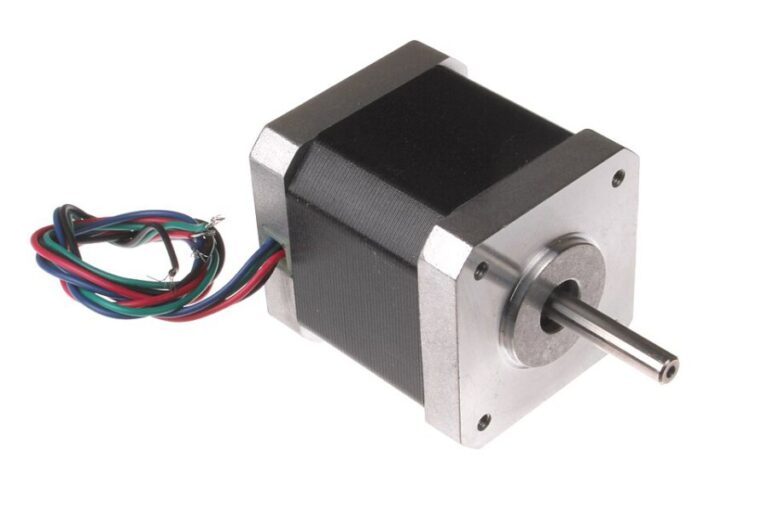
Record the motor’s rated current per phase, then check the driver carrier’s documented continuous capability and cooling requirements. The chip rating and the carrier’s usable current in a confined printer enclosure can differ substantially. Start with the board manufacturer’s recommendation. Inspect the cooling path and verify that the airflow around the controller matches the printer design.
For the A4988 chip, the full-scale current limit relates to the reference voltage and the current sense resistor: Imax = VREF ÷ (8 × Rsense). Use the resistor value documented for your specific board revision. Two different carriers at the same VREF can produce different current limits.
A worked calculation
For a carrier with 0.068 Ω sense resistors and a chosen limit of 0.8 A, the calculation is 8 × 0.8 × 0.068 = 0.4352 V, about 0.44 V. That is an arithmetic example. Check the rating and resistor value of your own motor and carrier before applying anything to your hardware.
The input current shown on a power supply is a different measurement from current in a winding. Pololu also notes that on its A4988 carrier in full-step mode, the stationary current measured in one coil is about 70% of the configured limit. A handheld meter on the supply side will give you a misleading basis for adjustment.
Check operation after any adjustment
- Identify the manufacturer’s test point and follow its low-voltage measurement procedure. Get qualified help if safe access is unclear.
- Switch off before connecting or disconnecting a motor, or changing its wiring.
- Run short, slow axis moves first, then test a representative print.
- If the driver repeatedly stops or the motor overheats, review the setting, cooling and mechanical load before resuming.