Get Reliable Distance Readings From an HC-SR04
By admin
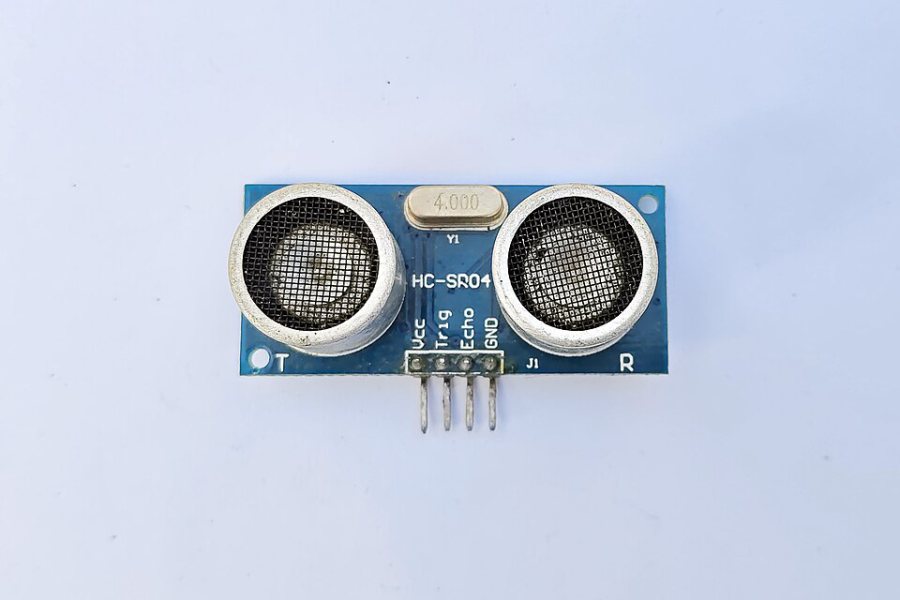
The HC-SR04 estimates the distance to a target by timing an ultrasonic pulse that travels out and back. It is easy to test with a flat board and a ruler. Once you move it into a project, object shape, angle and material can change the result. An accurate mounting position and sensible timing are as important as the distance formula.
Connect the sensor at the correct logic levels
A conventional HC-SR04 board uses a 5 V supply and its Echo output can reach 5 V. If you connect it to an ESP32 or another 3.3 V controller, use suitable level shifting or calculate a divider that keeps the input within the controller’s safe voltage range and still meets its logic threshold. Connect the grounds together. Check the actual module’s Trigger input requirements as well, particularly if you have a variant with a different part number.
Send a Trigger pulse of at least 10 microseconds and measure the duration of the Echo pulse. The datasheet recommends more than 60 milliseconds between measurement cycles. Near room temperature, divide the echo duration in microseconds by about 58 to estimate centimetres. For example, 1,750 microseconds corresponds to about 30 centimetres. Set a timeout so a missing echo produces a clear invalid reading and cannot stall the main loop.
Check the surface and the mounting
Point the sensor squarely at a hard, flat target. Take readings at several measured distances. If it reads well on the flat target and poorly on another object, check the object’s angle and material. Soft materials can absorb sound. A tilted surface can reflect the sound away from the receiver. Nearby brackets or walls can create competing echoes, and the module has a minimum sensing distance.
For a slowly moving object, the median of three or five valid readings can suppress isolated spikes. Preserve a separate invalid state for timeouts or missed echoes. If a project must react quickly, measure the actual response time before increasing the filter window. When mounting the sensor permanently, repeat the ruler test through the working range and record which surfaces give a consistent reading. A short test with the intended target can reveal limitations that a perfectly smooth test board hides.